

Peabody redevelopment: feedback from the public exhibition

Author: Cyril Richert

Peabody Trust organised an exhibition to consult on their redevelopment proposal on Tuesday 15th and Saturday 19th November.

We have published concerns of local residents in a previous article, published the day before the first opening of their exhibition.

You will find a description of the proposal on their website (and in our article) but we got more information from our discussions:

  • They anticipate that there will be about 546 dwellings on the site (still being tuned). Approximately half of these will be for private sale and the reminder will be affordable homes retained in Peabody’s ownership or part sold to share ownership buyers.

    Currently Peabody owns 100% of the existing dwellings (none are privately owned)
  • Building heights will range from 4-12 storeys.
    The maximum height of the existing buildings is 5 storeys plus lift rooms but according to the developers, in some places those buildings are higher than a normal 5 storey building because of built up ground. For example the blocks in Comyn Road will be 4 storeys but as they will be built from the existing pavement level the overall height will be smaller than the existing.
  • Car parking will be located surface level and underground. However only 20 spaces will be available on surface for disable/car-club. They have agreed in principle that car parking should provide a ration of 30% (163 car parking spaces), therefore the vast majority (~140) will be located underground.
    Currently there are 127 car spaces (36%) for 351 accommodations (but a large number are currently empty due to the plans for redevelopment).
  • Environmental initiatives, including solar panels and combined heat and power system to provide heating and hot water.

Below are 3 photos of the site mock-up (click on the image to see it bigger):

On Tuesday 15th, I had opportunities to talk with Claire Bennie (Peabody, now Development director, that we met in January 2010) and Katie Finnie (Hawkins Brown – Project architect). During my second visit on Saturday 19th I had time to complete the review of the scheme and also met with Elsie Josland (Farrer Huxley Associates – Landscape), Rich Spens (Max Fordham – Sustainability) and Richard Stanway-Williams (Peabody – Project Leader).

Environment and Landscape

As explained by Elsie in a very enthusiastic voice, the internal streets have been designed as a shared use/home-zone. People will have the priority  and car access will be limited to Eckstein Road, around the Community centre and to Comyn Road. The speed zone will be 10mph and street furnitures will be placed here and there to prevent vehicles and avoid any incentive to cut into the estate.

For all building with an internal courtyard, they will locate a children playground (0-11) and other play areas for all ages around the centre of the estate (outdoor equipments, chess board, table tennis).

Residents have complained about the current lake of light due to the size of the trees. Out of the current 50 trees, they plan to retain about 5 located at the entrances of the new layout of the estate. 71 new trees, which have been discussed and chosen by the current residents,  will be planted with different species (fruits, light tress such as Locust trees,…) with root barriers to avoid damages to buildings.

Lavender will be planted as a reference to the history of the site (and Lavender Hill).

They are also planning about 100 secure bike parking (within the courtyards) with a total of about 800 bike parking (the rule is ~1 per bed space).

Energy and Sustainability

Rich explained that all individual boilers will be replaced by one centralised heating system. Example of Denmark was given were the capacity is up to 10% of residents showering at the same time. Here, Peabody has extended the limit to 20%.

Photovoltaic panels will be located on higher roofs and alternate with green roofs. They hope to be able to provide about 15% of the total energy used by the estate.

Buildings

The proposal includes 51% of the dwellings being affordable, while 49% will be private. Amongst the 279 social flats, some will be offered in share ownership. 10% will allow wheelchair access and 80 could be used for people in mind.

On the size of the buildings Peabody thinks this will not create a precedent, nor will be awkward and disruptive in the area of low rise building of Northcote Road. Claire Bennie argued that without the town centre boundary change it would have been a) impossible to build taller buildings and b) impossible to locate local shops (the are planning 4 shops near St John’s Hill).

This is what we have argued all along. In addition the two arguments are wrong because

a) the planning documents say that “tall buildings in this location are likely to be inappropriate” not that they are forbidden if they can justify themselves with their architecture and their environment; and

b) in the SSAD-Preferred Options document, November 2009, the site was not in the town centre boundary but the document already said: “The street block fronting on to St John’s Hill could include a mixed-use development with individual retail units to ground floor.”

In addition, Peabody believes that since the town centre boundaries have been changed it has been agreed with the Council and that this is now reality (obviously not knowing that it was under discussion before the government inspector last October, and we will have to see his report at the beginning of 2012).

The construction is meant to happen in 3 phases for a total of 6 years.

Last but not least, for anybody having seen the Feedback Form, it seems very difficult to answer No to any of the questions. For example, is anybody saying No to “Do you support the concept of integrating the Peabody site into the surrounding streets“? Maybe the question would have been more appropriate as: “Do you think the proposed scheme will integrate the Peabody site into the surrounding area?” This is just an example…

When asked how many comments they need to receive in order to address the questions raised, they did not answer. However we encourage anyone to send their message:

Email: clapham.development@peabody.org.uk

Post: Richard Stanway-Williams, Peabody,
45 Westminster Bridge Rd, London, SE1 7JB

November 24, 2011 at 1:50 pm 1 comment

In the Press: The Wandsworth Guardian is talking about Peabody redevelopment

An article was published on the Wandsworth Guardian website on Tuesday November 15th regarding Peabody estate public exhibition.

You can also click on the screenshot below to read the article:

November 18, 2011 at 3:27 pm Leave a comment

In my view, 10 storeys is excessive, and anything above that entirely out of order

Author: David Hargreaves

Regarding the Peabody Estate, in principle I am not opposed to redevelopment. The existing layout is fortress-like and the buildings are gloomy. Opening it all up would be good. The Peabody people seem to be amenable to discussion and, at least partially, sensitive to local opinion. The latest version of their plans is a big improvement on the first version.

HOWEVER, I do think we should attempt to hold the line as best we can on height. The 8 storeys on the Lumiere were supposedly an “exception” permitted by the Council against local opposition. The re-designation of the town centre to permit a tower block on part of the Peabody site is a consummately devious Council manoeuvre. There is no doubt a slippery slope could easily come into operation, permitting at some future date yet higher buildings close by.  Like it or not, the Lumiere is now a fait-accompli and there is a new 8 storey benchmark for height at the top of St John’s Hill.

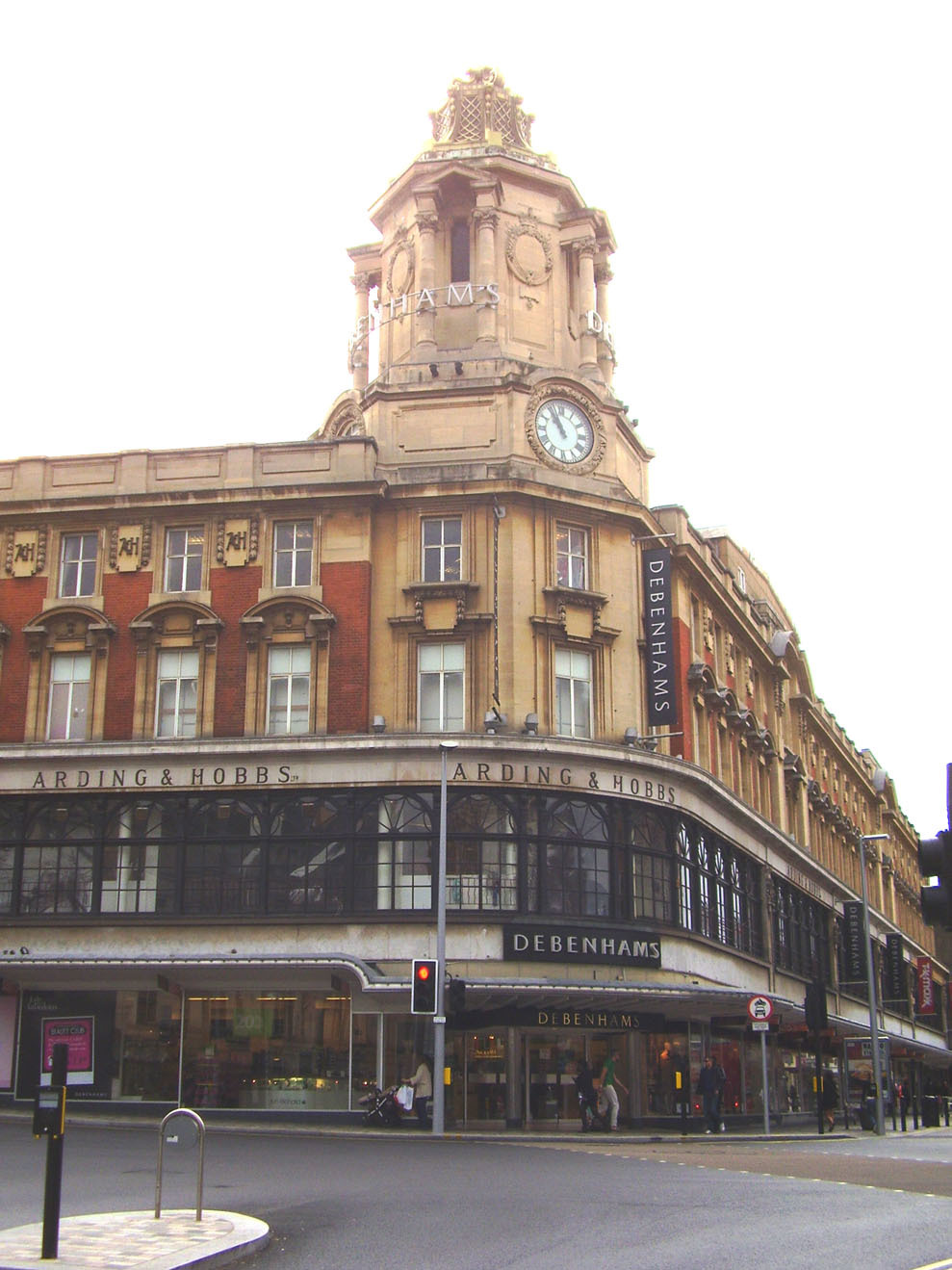
In my view, 10 storeys is excessive, and anything above that entirely out of order. Looking at the new plans and thinking about the geography, it does seem that the highest proposed buildings are in fact located at the most prominently visible position on the estate, fronting or almost fronting onto St John’s Hill. These would be starkly visible from, say, the area Arding & Hobbs (especially the Falcon Pub and the station main entrance), with all the added elevation effect of the hill enhancing their towering presence, plus the wide open space of the railway cutting in the other direction gives no cover at all.

Proposal for some changes

If, and it’s a big if, buildings higher than 8 storeys are to be permitted anywhere on the site, would it not be a better idea to locate them more towards the centre of the estate, surrounded by buildings of lower height, thus helping to conceal their towering nature and offering a more graduated prospect of the estate’s overall height to observers?  Wandsworth appears quite happy to re-designate the official boundaries of the town centre, so I expect they could handle whatever changes such an initiative might demand.

It does seem to me that a number of buildings towards the centre of the estate could more comfortably have some floors added, enabling the more prominent buildings at the edges, notably anything of 12 storeys, to be capped at a much more appropriate height for the general environment.

***

Read also our other articles on this website:

November 17, 2011 at 2:33 pm 2 comments

Why we ask for amendments on the Peabody proposal

Author: Cyril Richert

We have commented in a previous article about the new proposal released for the redevelopment of the Peabody estate in Clapham Junction.

Peabody Trust released their first newsletter which introduces the proposal, advertises the public exhibition and the consultation website for the redevelopment of Peabody Estate, in Clapham Junction.

Beside the notable arguments in favour of the proposal (due to the new government criteria for estates, Peabody must repair/redevelop some of its estates, including Clapham Junction; a new plan will also aim to open the estate to the neighbourhood; the layout will show more diversity in term of sizes, shapes and colours for the blocks) we highlight a number of criticisms.

Points of objection:

The main criticism is obviously the size of some buildings.

1. Located at the top of the hill a 12 storey tower will appear to be about 16 storeys when viewed from Arding and Hobbs/Debenhams opposite pavement (because of the seventy foot tall hill that it sits on).

2. Near the Arding and Hobbs/Debenhams road junction a building of 16 storeys was refused in June 25th 2009. The officer’s report said that “due to its sheer size [the development] would fail to preserve the appearance of the area“. A building of 8 storeys and similar size as the directly opposite building – was later granted permission.

3. The area is inappropriate for buildings more than 5 storeys. Although the Council changed the description of the site lately, we demonstrated that the original description of the Peabody site as lying entirely outside the town centre should be retained: a scheme has to be granted for its own merit, not by using tricks to overturn the current policies.

4. Opposite the site, a 8-storey building, taller than the surrounding, was granted permission. The main merit of the scheme was to ensure the retention of the former Granada cinema but 4 years later the refurbishment of the auditorium is still await. The 8 storey development is now highly visible and obstructive from the Junction.

In an area with buildings of 3-4 storeys, the Council allowed nearly 50% more on the basis that it would bring the benefit of the refurbishment of the Granada auditorium. Now we are asked to approve another 50% increase – 12 and 10 storeys, because a 8 storeys exists already and it will benefit the much needed redevelopment of the estate. What next ? A 18 storeys because a 12 will be there, in order to compromise for example for the benefit of the much needed redevelopment of Clapham Junction station ? Do we want to carry on that trend ?

Five years ago, the area was only made of buildings of 3-4 storeys. Within a few years we are moving to 8 and now 12… while a thousand local resident expressed their disagreement against tall building in Clapham Junction just 2 years ago.

We have received personal comments from local residents, including members of Wandsworth Living Streets, the Wandsworth Society and the Battersea Society. They say:

Redevelopment is now required (the present buildings are seriously unattractive; there is an awful lot of wasted paved over space). They think the scheme is generally a distinct improvement on the first one, less cluttered looking. They do sympathise with Peabody knowing they have to make a financially viable proposal, even with a social housing project. They support the social housing objective. The Trust has to somehow make the figures add up, and they need income.

Some have concerns about the population density and the height of the buildings. Going from 5 story to 11-12 story buildings will affect the area (increased shadows and extra strain on the already over crowded foot paths and street). 12 storeys is still too tall (although much better than the previous 21). Walking down Battersea Rise from the common, the 8 storey Granada development looms above the existing streetscape in an unpleasant manner. Their proposals need some further modifications. The arguments about height with the old Granada building are very pertinent. We seem to have been left with a permanent eyesore. The 8 storeys on the Lumiere were supposedly an “exception” permitted by the Council against local opposition. There is no doubt a slippery slope could easily come into operation, permiting at some future date yet higher buildings close by. A 12-storey building could be used as the thin end of the wedge, and before we know where we are, the Council will suggest that a 16-storey building in the area would be fine, as it is not really so very different from 12.

They question the necessity of the shops as there is not much street frontage towards St John’s Hill. The estate marks a natural end of the town centre shops – so no need for any more on St John’s Hill. A bit more greenery needed, and of course permeable. There appears to be little planting to the square proposed to “green” the area. There are also some concern about trees, balance between surface and underground car parking, provision for cyclists — securing bikes, movement through the estate, provision for children’s play areas. There’s no mention of bike parking …  absolutely crucial if we want to minimise car use, pollution and congestion in the area

There is a shared concern on the future of the entrance lodge, an attractive late C19 building on the western tip of the sit in Strath Terrace – which must be a relic of the previous use of the site as an orphanage.  Should the plan be modified to allow it to be retained?

Peabody Trust has shown some understanding in its consultations. They have already changed their plan, reducing the density of the proposal by 20% and the size of some buildings consequently. We still believe that some amendments are needed in order for us to support the scheme and we will discuss the points with them during their public meetings. This should be the purpose of their consultation, before a definite submission for planning permission in early 2012.

We encourage everyone to let them know your opinion (feel free to copy us in any correspondence):

Email: clapham.development@peabody.org.uk

Post: Richard Stanway-Williams, Peabody,
45 Westminster Bridge Rd, London, SE1 7JB

The public exhibition dates are as follows:

  1. Tuesday 15 November 4pm – 8pm
  2. Saturday 19 November 10am – 2pm

And will be held in St Mark’s Church Hall, Boutflower Road (next to the estate).

(more…)

November 14, 2011 at 1:50 pm 5 comments

Peabody redevelopment: the proposal

Author: Cyril Richert

Peabody Trust released their first newsletter which introduces the proposals, advertises the public exhibition and the consultation website for the redevelopment of Peabody Estate, in Clapham Junction.

The existing

The existing site comprises of 351 residential dwellings with some limited community facilities, workshops and storage facilities for residents. The Estate is characterized by mid rise deck access blocks, predominantly 5 storeys in height. All blocks share the same building materials, detailing and window sizes. There are 20 blocks within the estate.

The proposal

The Peabody Trust have been liaising with Wandsworth Council and the Greater London Authority (GLA) to establish the main principles of the redevelopment. According to their website, their latest discussions with the Council are based on the proposals listed below:

  • Approximately 550 mixed tenure dwellings, including  homes for the elderly;
  • New community centre at the heart of the site;
  • Small-scale shop/cafe/business uses fronting St John’s Hill;
  • Building heights ranging from 4-12 storeys;
  • High quality landscaping, new streets and public open space;
  • Car parking at surface level and underground; and
  • Environmental initiatives, including solar panels and combined  heat and power system to provide heating and hot water.

Images from Peabody development’s website. NO IMAGE AVAILABLE SHOWING THE IMPACT FROM DEBENHAMS LOCATION/St JOHN’S HILL

A wide range of accommodation will be provided from 1 bedroom flats to larger family housing.  A significant proportion will be for rent but there will be market sales housing as well.

A comparison with the previous proposal (September 2009)

The previous plan (a £100 million project regeneration) was also aiming to make the estate open to the surrounding community while nearly doubling the number of homes (650 flats), enlarge properties and give all residents private outdoor space (which means – in developer’s jargon – balcony).

It included several taller building along the western edge of the estate, with a 21-storey tower directly fronting St John’s Hill, along with  a 13-storey and a 10-storey building.

We met with Claire Bennie [Peabody Trust - Deputy Head of Development] on 22 January 2010 and she explained that, albeit being a non-profit organisation, they have to make the scheme pay for itself and therefore aim to maximise the density and potential of the site. Therefore the intention was to increase the density in order to be able to fund the redevelopment with the private sale of some of the properties.

However it was clear that her main concern was the planning documents produced by the Council stating that:

Applications for buildings of 5 or more storeys will be subject to the criteria of the tall buildings policy [...] tall buildings in this location are likely to be inappropriate.

and she specified that they would seek to clarify the guidelines with the Council.

How the Council is making things easier

We demonstrated in a previous article how the Council changed the proposed planning rules in order to allow taller building for the Peabody redevelopment.

In a nutshell, the initial planning documents (Site Specification Allocation Document 27/11/09) said:

In accordance with Core Strategy policy IS3d, tall buildings in this location are likely to be inappropriate.

In a response to last year’s Wandsworth Borough Council consultation, The Peabody Trust (Peabody)  wanted the Council to remove the wording “inappropriate“, which they claim contradicted the main policy which states that tall buildings may be appropriate in locations that are well served by public transport. However this argument was rebuffed by the government Inspector’s conclusion in last year’s examination that only sites within town centres, focal points of activity and Nine Elms near Vauxhall may be appropriate for tall building and this did not extend to all ‘areas with good public transport accessibility’.

Therefore the Council tried to ease the case for Peabody and overturned the Inspector’s argument by changing the boundary of the town centre in order to include part of the estate (where most of the tall buildings are planed).

The final proposed SSAD says:

The part of the [Peabody] site within the town centre is identified as being sensitive to tall buildings, whilst on the southern part of the site adjacent to Wandsworth Common they are likely to be inappropriate.

I let you appreciate the difference between the words “sensitive” and “inappropriate“.

Shall we support the proposal?

Arguments in favour of the proposal are:

  1. Seven years ago, the government created a series of criteria defining a minimum standard for estates. Peabody identified 4 estates were they thought it could be better to redevelop rather than to repair, and Clapham Junction is one of them (the estate was constructed in 1936 and modernised in the 1970s. 13 years ago they replaced the windows).
  2. Instead of large wall (ranging from 2m – 4 m height) around its perimeter, the proposal aims at opening it up to make it easier to navigate. They also plan shop/cafe/business uses fronting St John’s Hill
  3. Instead of all blocks sharing the same building materials, detailing and window sizes the proposal design suggests different sizes, shapes and colours for the blocks.

Criticisms

The main criticism is obviously the size of some buildings. Located at the top of the hill a 12 storey tower will appear to be about 16 storeys when viewed from Arding and Hobbs/Debenhams opposite pavement (because of the seventy foot tall hill that it sits on).

Near the Arding and Hobbs/Debenhams road junction a building of 16 storeys was refused in June 25th 2009. The officer’s report said that “due to its sheer size [the development] would fail to preserve the appearance of the area“. After the Committee meeting,  the chair commented: “There is scope for a taller building [than 5 storey - note from CJAG] here but it must respect its immediate surroundings and the properties around it.

The area is inappropriate for tall buildings. The Council changed the description of the site last year as we demonstrated to the government inspector a few weeks ago and we argued that the original description of the Peabody site as lying entirely outside the town centre should be retained: a scheme has to be granted for its own merit, not by using tricks to overturn the current policies.

The Council has already allowed the development of a 8 storey building facing Peabody (Lumière apartments) 4 years ago, despite the area now being regarded as inappropriate to buildings of more than 5 storey and the opposition of local residents. The main merit of the scheme was to ensure the retention of the former Granada cinema (planning application 2007/5242). Years after the beginning of the construction, and while luxury flats of 1-2 bedrooms are currently advertised for £500k, the refurbishment of the auditorium is still await!

In an area inappropriate for buildings of more than 5 storeys, the Council allowed 8 on the basis that it was not much more, and would bring the benefit of the refurbishment of the auditorium (a nice trick, but the developers are not eager to achieve that now that they are selling their flats). Now we are asked to approve 12 and 10 storeys, because a 8 storey exists already and it will benefit the much needed redevelopment of the estate. What next ? A 18 storey because a 12 will be there, in order to compromise for example for the benefit of the much needed redevelopment of Clapham Junction station ?

We acknowledge that in the past the Peabody Trust has always been willing to engage with the local residents. They have already changed their plan, reducing the density of the proposal by 20% and the size of some buildings consequently. Their plan shows already a number of improvements.

Shall we support the current proposal on the basis that it could be worse, and that’s better than nothing? Or shall we say that this is better, but we are not there yet and it will need some adjustment in order to gain the support of the community?

A redevelopment of Peabody will happen because of the new series of criteria defining a minimum standard for estates set by the government. The quality of the scheme, the integration with the surrounding areas and its consequences on future developments will depend on our acceptance.

* * *

The public exhibition dates are as follows:

  1. Tuesday 15 November 4pm – 8pm
  2. Saturday 19 November 10am – 2pm

And will be held in St Mark’s Church Hall, Boutflower Road (next to the estate).

November 8, 2011 at 12:39 pm 5 comments

CJAG proposal for the redevelopment of Clapham Junction station

Author: Cyril Richert 

Over the last 3 years, we have been supported by many local residents, associations and councillors who were keen to join us to express their concerns about Clapham Junction and particularly the station.

In 2009, we have been involved in the campaign against the project to erect two 42 storey towers on top of the train station. With letters and petitions, we were supported by more than a thousand local residents expressing their objections to the proposal, but also their wish to redevelop the facility.

We are concerned that our involvement should not just be reactive, but a positive contribution to any new development. Clapham Junction Station is currently the biggest junction in Europe. It is in a disgraceful state, a national scandal, and as such it should be treated as a priority. Money is, as always, the stumbling block but with the help of concerned people we may be able to inspire more imaginative thinking about the scope of the opportunity without resorting to skyscrapers to pay for it.

For many months we have collected ideas and opinions, asking for residents and local stakeholders to participate and express their views, concerns and opinions on the future of our station. All comments have been published on the website (here) and area also available at the bottom of this post.

We have now published the dossier of the Clapham Junction Action Group along with the Annex documents.

Our main conclusion is:

All recent examples show that instead of having a vision for the future of the rail station, the authorities have always reacted to “patch” urgent and critical issues (congestion and overcrowding lead to the opening of Brighton Yard, capacity regulation forced an urgent workout on Grant Road side). All those problems were however highlighted by users and local residents for years.

With the failure to achieve any redevelopment for Clapham Junction in the past decade, along with the lack of a global planning for any long term commitment, the situation will be exacerbated with passengers and services increasing.

In an ideal world, a regeneration of the Clapham Junction area would consist of a fabulous new station complex on the site of the existing buildings South of the tracks on the model of Birmingham New Street. This would recognise the function of the site as a station, and allow a reasonable development of additional office and retail facilities without creating the eyesore of high rise residential blocks.

The redevelopment of Clapham Junction station is Network Rail’s responsibility. The site should easily justify such a development based on passenger numbers, and we believe that this should remain our aspiration.

You can download all documents below:

DOSSIER: Station Redevelopment Proposal-July11

ANNEX1: Consultation MSF 2009 (42-storey skyscrapers)

ANNEX2: contribution received by CJAG:

  1. Example of redevelopment with Basel Station
  2. 01/02/2010-KateWilliams
  3. 10/02/2010-Tony Papard
  4. 17/02/2010-Judith Howard
  5. 17/02/2010-Michael
  6. 19/02/2010-David Hargreaves
  7. 26/02/2010-Sue Vidovic
  8. 08/03/2010-Derrick Johnson
  9. 08/03/2010-Janet Johnson
  10. 09/03/2010-Richard Gott
  11. 10/03/2010-S Rose
  12. 19/03/2010-Carol Jennings
  13. 24/04/2010-Cyril Richert
  14. 05/05/2010-Julia Matcham
  15. 12/05/2010-David Curran
  16. 13/05/2010-Lynda Mathewson
  17. 13/05/2010-Paul Forrester
  18. 15/05/2010-Tim Glass
  19. 15/05/2010-Marianne I. van Abbe
  20. 16/05/2010-David Hargreaves
  21. 16/05/2010-Will Henderson
  22. 19/05/2010-Pat Johnson
  23. 31/05/2010-Elaine Macfarlane
  24. 06/06/2010-Marney Rd
  25. 06/07/2010-Judith Howard
  26. 01/09/2010-Craig Liversidge
  27. 23/10/2010-Peter Deakins
  28. 30/11/2010-Wandsworth Labour Group
  29. 12/01/2011-Halldor Fossa
  30. 03/06/2011-Battersea Society

Distribution:

A hard copy of the dossier (with annex) has been sent (or given during meetings) within the past 3 weeks to:

  • Network Rail – Paul Plummer
  • Office of Rail Regulation – John Larkinson, Nick O’Hara
  • Steer Davies Gleave (consulting company commissioned by Network Rail to review investments) – Vicky Thompson
  • Secretary of State for Transport, The Rt Hon MP (Putney/Wandsworth) – Justine Greening
  • Wandsworth Council, Environment and Community Services – Tony McDonald, Martin Howell
  • Wandsworth Council, Strategic Planning and Transportation Committee – Cllr Russell King
  • Northcote Ward Councillors – Cllr Jenny Browne, Cllr Peter Dawson, Cllr Martin Johnson
  • Labour Group – Cllr Tony Belton
  • Battersea Society – David Lewis
  • Wandsworth Society – Philip Whyte
  • Wandsworth Guardian – Alexandra Rucki
  • South London Press –  Lindsay Burns, Paul Dietrich

October 28, 2011 at 12:12 pm 1 comment

Hearing Session: report on discussions on Clapham Junction’s development framework

Author: Cyril Richert

An independent inspector has been conducting hearings in October regarding the Proposed Submission versions of the DMPD (Development Management Policies Document) and SSAD (Site Specific Allocation Document), which provide detailed policies to support the delivery of the Core Strategy [1].

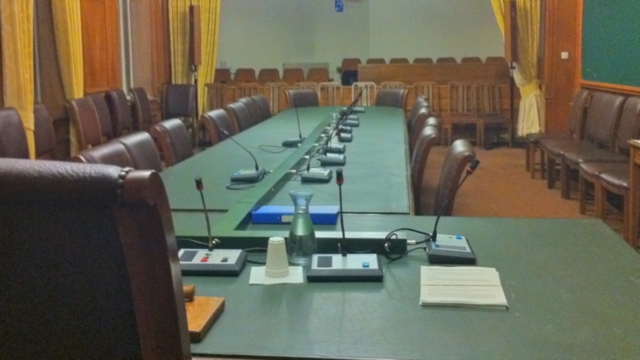
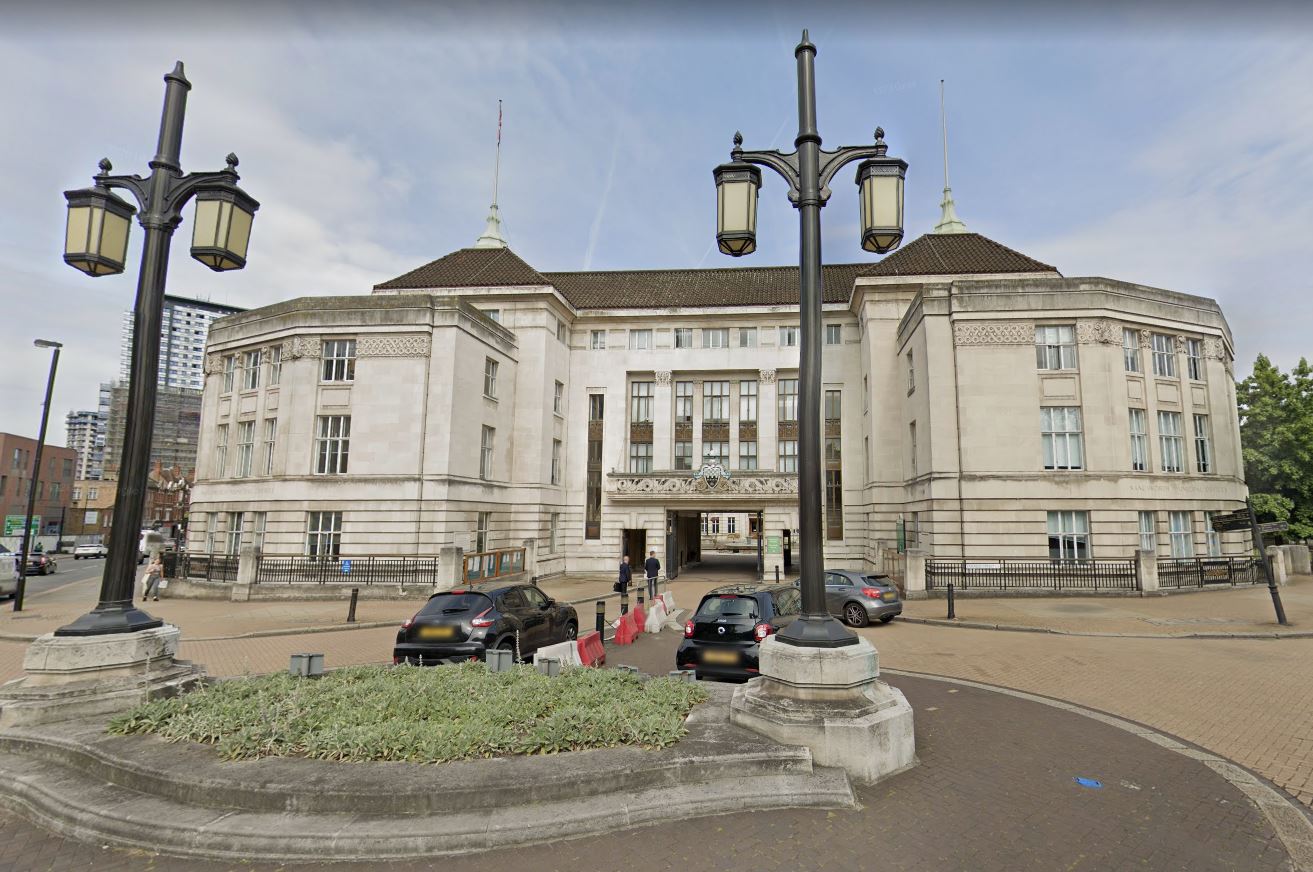
On the afternoon of October 11th, Clapham Junction was subject of the meeting, and the list of topics was set in accordance to the objections raised by CJAG, including our criticism after the response to the consultation HERE. The meeting was organised in Room 123, Wandsworth Town Hall, with half a dozen Council officers, the inspector, the CJAG and the Battersea Society and a couple of people in the audience.

We have listed below the 4 topics with the arguments of CJAG.

Given that prospects for redevelopment of the adjacent land are uncertain, does the inclusion of reference to the re-alignment of Falcon Lane (proposal 4.1.1) introduce an unwarranted element of uncertainty?

Criticism (representation p7): The current vision will involve the move of the current Boots and the loss of Lidl and the car park. Although it could be envisaged in theory, there is no consideration on feasibility and cost (who is funding what): the land to the north will dramatically be reduced in size and value, rendering the scope of future investment there questionable at best.

In addition frontage and main residential windows of any development proposed will be forced to face north and directly looking upwards at a railway embankment.#

Contradiction with the Core Strategy encouraging the development of public realm and the provision of retail floorspace [Core Policies for Places: Policy PL 13 b) – page 77]. Although the public realm is proposed to be a square in front of Asda, it means a complete redevelopment involving Asda, Boots (Asda land ?), Liddl, and other adjoining properties.

OAK Trading (Hotel 155 Falcon Rd) objected and asked for amendment:

• Realignment will create an area of undeveloped land between their site and the hotel (1-p2)-> prejudicial impact on its interest. Comment 417 OAK TRADING:

  1. it would reduce the size of the sites to the north and render redevelopment there less viable.
  2. it could cause traffic difficulties by necessitating construction of a larger junction at Falcon Road.
  3. it would still leave a relatively narrow strip between the realigned road and the rear of the gardens of the houses in Mossbury Road. The gardens of the houses on the north side of Mossbury Road are very short and any new residential development above ground floor level would surely need south facing windows which could harm the amenity of the houses in Mossbury Road.

• The Company has not been involved collaboratively with your Council over the future development strategy for Falcon Lane and environs (1-p3)

• Lidl (the land to the north of Falcon Lane is owned by retailer, Lidl GmbH Limited)has no interest in redeveloping its food store site to allow the realignment of Falcon Lane – and we would question the logic and deliverability of this SSAD policy. (1-p3)

Proposal: Is the south side of Falcon Lane a suitable site for future residential development? The rear gardens of the houses in Mossbury Road are already tiny. Any reasonable view will concede only 2 realistic solutions:

  1. to offer extension of existing properties by land purchase (also supported by Oak Trading ID 418 suggest slight realignment and development Mossbury Rd)
  2. to redevelop the open area with public space/square.

Tall buildings: The site is sloping down from Lavender Hill to Falcon road. The impact of a 5 storey building at the bottom won’t be the same as for a similar height at the top, where current buildings do not exceed 3-4 storeys.

Submission Statement of Consultation, p85 (3.222 Sites)

CJAG and Oak Trading Ltd consider that reference to the realignment of Falcon Lane has not considered feasibility and that costs and the impact of reducing the size of the ASDA/Boots/Lidl site on the deliverability of development have not been considered.[...] There has been no cost consideration applied to this approach and the intention is to flag up a potential improvement. The Council currently has no plans to realign the road. If a developer were to come forward it would be for them to undertake the necessary assessments of viability in the first instance. It is unclear as to the likelihood of such a scheme coming forward in the next 15 years with the existing economic uncertainties, however it is possible that one of the sites may come forward for development, and identification of the SSAD for a potential wider redevelopment is considered worthwhile.

This wishful dream (unrealistic, no cost, no viability study…) has not place in a document which should be used as guidelines for planning and future development.

Are the proposals for improvements to the Clapham Junction Station Approach (proposal 4.1.3) sufficiently definitive and positive?

• We acknowledge the mention of the site being sensitive to tall buildings.

• We agree on the justification providing that the site offers a real opportunity to provide the type of retail unit suited to the larger chain stores.

However the current presentation (as shown on graphics in previous versions of the SSAD) is actually re-using some of the planning of Delancey’s proposal without addressing the much needed issue of circulation between the two sides of the railway (Grant Road vs St John’s Hill).

It is using developer’s plans without any concerns for residents criticisms and resident suggestions!

The proposal map could be amended to present: Current map (#64) vs Proposed presentation, including open path and a much larger coverage of the railway allowing better retail usage.

Submission Statement of Consultation p86 (3.225) : CJAG acknowledge the mention of the Clapham Junction Station Approach site being sensitive to tall buildings and agree that the site provides a real opportunity to provide the type of retail unit suited to larger chain stores, however CJAG consider that the issue of circulation between the two sides of the railway still needs to be addressed. The Council acknowledge that this is a key issue facing Clapham Junction. [...] CJAG also consider that the ‘Land at Clapham Junction Station site’ should be allocated for mixed use development. As the site is outside the town centre it is more appropriately allocated for high density housing development.

Outside the town centre? Clapham Junction station?

As the officers wrote (Submission Statement of Consultation p85) “the Council considers that the relatively narrow site located between the railway lines is currently inaccessible and there are a number of obstacles to its development“.Any redevelopment of the Station Approach site will affect the station itself and therefore the town centre in general. It is currently a train depot and a business use could be retained.

In addition, latest discussion with the chair of the Transport Committee, Cllr Russel King, told us that a report was published showing London unable to sustain with growing demand for public transport within the next 5 years. There it is requested that all boroughs focus on developing business (instead of all residential accommodation) to relocate the demand.

It is therefore legitimate to consider CJ station as an appropriate site for mix-used/office development.

Should the land at Sendall Court (proposal 4.1.2) be allocated for open space rather than residential or mixed use?

Criticism (representation p8):

Visual representation: The visual representations provided by Berkeley first for their redevelopment of Lanner and Griffon House always presented an open space, used for public space, and balancing the very high density of their proposal.

In order to help visualise the impact, I presented the photos showed by the Developer (taken from its website) against a very quick montage assuming the impact of new constructions as it could happen in the space argued. Aren’t things less “appealing”?

In order to get approval, the developers of the site of Lanner and Griffon House submitted a documentation showing illustration with wide public spaces around their tall buildings. If it was showing that the Car park adjacent to Sendall Court could see another building increasing the already high density of the area, the public view and final decision of the committee might have changed.

During the Ram Brewery Enquiry (report of Colin Ball, the Inspector July, 4th 2010) a lot of consideration was made on the applicant images. It was said that the applicant’s AVRs must be taken as accurately representing what would be seen by the human eye. On the applicant image it is presented with a public square with grass and trees, which is not what the council is suggesting.

On the Submission Statement of Consultation, p12 (3.16 on Tall Buildings) it says “Clapham Junction Action Group request reference in this policy clause that the visual representations must accurately represent what would be seen by the human eye. This is accepted, but is considered more appropriate to be within the context to the policy.”

Public Space:

Submission Statement of Consultation p86 (3.224) : CJAG want the Car park adjacent to Sendall Court, Grant Road to be allocated entirely for public open space, in view of the consented developments at Lanner and Griffon House. This is not accepted as the site is not within an area of open space deficiency and is within 300m of York Gardens. Allocation of the site entirely for open space would therefore not be a priority use of the site.

SSAD p115 acknowledge that the site is located within an area of deficiency in access to nature

In addition, the Report of the Independent Review Neil Kinghan on Clapham Junction disorder (published a few days ago) made a recommendation that the Council should look at the actions it might take to reduce the influence of the gangs, for example in the design of its housing estates, the provision of more public areas such as the square on the Doddington Estate (report 6.16 p38).

Density:

In the previous version, proposed submission, the SSAD document included a section 4.1.2 Lanner and Griffon House, Winstanley Road, SW11. Representations on Lanner and Griffon House were received from Clapham Junction Action Group, Battersea Society and St James Group. We highlighted that the whole area is currently under construction with 3 buildings/high density up to 11 storeys and – except considering that this investment has any chance to be knocked down within the next 15 years, the mention of tall building of more than 5 storeys being inappropriate shows deep contradiction within the Council’s policy.

REMEMBER: according to SSAD, this is an area inappropriate to tall buildings.

While this area is considered as inappropriate for tall building and the whole location is covered by tall buildings, it must be time to show respect on the visual impact of developments.

Proposal: It should be mentioned that any development of the area should reserve a larger part to a public space (at least 50%).

Is the incorporation of part of the Peabody Estate land (proposal 4.1.6) into the town centre justified by the evidence?

1st argument of Peabody’s developers: Public transport

On the CS examination Peabody Trust said: “The Peabody Trust support the broad locations identified on Map 15, which are considered to be appropriate locations for tall buildings. The Peabody Trust support draft Policy IS3 and consider that sites that are located close to public transport nodes and key town centre services and facilities are appropriate where regeneration benefits can be demonstrated through the use of higher density development.

However that argument was refused by the inspector during the examination of the CS as shown in response to questions CJAG submitted Dec 8th 2010. The Council replied : In last year examination, the government Inspector ’s conclusion was that only sites within town centres, focal points of activity and Nine Elms near Vauxhall may be appropriate for tall building and this did not extend to all ‘areas with good public transport accessibility’.

Then 2nd argument: move the Boundaries

The first version of the SSAD (Preferred Option) 27/11/09 said:

Tall buildings: In accordance with Council’s Stage 2 Urban Design Study – Tall Buildings, applications for buildings of 5 or more storeys will be subject to the criteria of the tall buildings policy contained in the emerging DMPD. In accordance with Core Strategy policy IS3d, tall buildings in this location are likely to be inappropriate.

Peabody Trust criticised the wording and wrote on 05/02/10:

Peabody is concerned that the final sentence under the heading ‘Tall Buildings’ contradicts the analysis referred to above by stating: “In accordance with Core Strategy policy IS3(d), tall buildings in this location are likely to be inappropriate.

You will note that Peabody based its analysis by stating that “Core Strategy policy IS3(d) clearly states that tall buildings may be appropriate in locations that are well served by public transport

->The adopted version of the CS does not mention public transport in tall building justifications

The current SSAD submission version says:

Tall buildings: In accordance with Council’s Stage 2 Urban Design Study – Tall Buildings, applications for buildings of 5 or more storeys will be subject to the criteria of the tall buildings policy contained in DMPD Policy DMS4. The part of the site within the town centre is identified as being sensitive to tall buildings, whilst on the southern part of the site adjacent to Wandsworth Common they are likely to be inappropriate, in accordance with Core Strategy Policy IS5d

Everyone can see that after the previous inspector’s words, the Council could not justify the site suitable for tall buildings based on its PTAL (over-writing the inappropriate location). Therefore they changed the rules, deciding to extend the town centre to suit exactly the developers’ plan.

You will appreciate that the previous part that we highlighted in bold, stating that tall building in this location are likely to be inappropriate has been removed and replace with only a mention of the southern part of the site, the remaining becoming only “sensitive”.

We consider the boundary change in the DMPD to be an attempt to justify the inclusion of part of the estate in the “sensitive but not inappropriate to tall building” area for town centres, rather than the promotion of the St John’s Hill frontage.

This is actually acknowledged in by the council in DMPD Proposed submission page 145 saying: This change is proposed in order to promote active town centre uses along the St John’s Hill frontage, and to encourage regeneration of the Peabody Estate.

In addition Policy IS5d is related to the percentage of affordable housing and therefore is not appropriate regarding tall buildings. On the contrary, by linking the target for affordable housing with tall buildings, the Council is clearly sending a message of sympathy for tall buildings in order to comply with the very aggressive targets it decided to set out in CS IS5.

During the meeting, Council officers acknowledged the mistake and said it should read IS3d instead of IS5d.

History of tall building in Clapham Junction area

In 2008-2009, Delancey (which worked on it with the Council for 5 years) put forward a proposal for two 42-storey towers at Clapham Junction. The Council received petitions and individual letters (in total more than 1000) telling with numerous arguments that residents do not want tall building in the area.

Although the Core Strategy (which was adopted later) say in PL13 “Taller buildings could not only help deliver significant regeneration benefits but also give a visual focus to the town centre”, it was balanced by Stage 2 Urban Design Study: Tall Buildings-2.34 saying: “the centre has a rich historic heritage and as such is considered sensitive to tall building”.

DMPD – DMS4 says: b. Applications for tall buildings will be required to address the following criteria in order to demonstrate compliance with Core Strategy Policies IS3d and IS3e:

v. assess the impact on the existing historic environment through a conservation impact assessment identifying how the surrounding area’s character or appearance or the setting of a listed building will be preserved or enhanced.

To conclude, we can recall the Council officer’s report for Capstick in Putney saying the proposal is deficient in a number of policy areas (DMPD, SSAD…etc) but the benefits of regeneration is balancing the case. A change of boundaries was also made in this particularly case in order to suit the developer’s needs.

>>The council is setting up policies that will apply strongly to small development but is prepared to ignore them (and ignore the local residents) for big development (even arguing on “exceptional circumstances” while the word “exception” has been refused by the previous inspector).

>>The Council is setting plans in order to suit developers and in opposition to resident views, working hand to hand with developers and modifying rules and policy to remove valid objections of residents.

***

A report on the hearing session will be drafted for the next Transport Committee on November 14th.

Wandsworth Borough Council (WBC) should receive the report from the inspector early January 2012.

[1] The Clapham Junction Action Group has submitted a contribution that you can read HERE along with additional questions and comments THERE.

October 27, 2011 at 11:54 am Leave a comment

Planning Forum meeting October 2011: some feedback

Author: Cyril Richert

On Tuesday, October 18th, was organised the Planning Forum at Wandsworth Borough Town Hall. You will find below some comments and feedback. They do not intend to replace any minutes and are obviously my own views of the meeting (and comments in red).

Local development framework update

Development Management Policies Document & Site Specific Allocations Document

An independent inspector was conducting hearings regarding the Council’s planning documents at the beginning of October (the Clapham Junction Action Group was invited to attend on October 11th and we will report about this meeting here soon).

The main topics were: tall buildings, housing policy, town centre, Wandsworth delta, Nine Elms, with thorough discussions on Putney and Clapham Junction. Martin Howell (Group Planner – Policy & Information), thanked everyone for participating.

A report on the hearing session will be drafted for the next Transport Committee on November 14th.

Wandsworth Borough Council (WBC) should receive the report from the inspector early January 2012.

Although not clearly stated, the date is very important. The government is currently working on new regulations (localisms bill) allowing local authorities to ignore the inspector recommendation as long as the document is said to be sound. It seems that the Council is betting that the vote in parliament will come in December, thus making any recommendation from the report in January not binding and WBC could choose easily to ignore them.

As we received grateful messages from the Council officers on the opportunity to exchange with local groups and residents during those examinations, I inquired about the possibility to set regular meetings with Council officers but Martin Howell replied that he preferred to have invitation for public events organised by the amenity societies. Meeting will also happened next year on the review of the Core Strategy (already!).

Planning Obligations SPD

Section 106 can no longer be used to collect monies and it has been replaced by Community Infrastructure Levy (CIL). Nine Elms’s CIL are higher than for the rest of the borough.

Development management update

Pre-application charges

From now on boroughs can set their own fees. However there is no date yet for implementation, maybe April 2012.

In case WBS decides to to set pre-application fees, officers said it will need to be transparent and documents and reports of pre-app. meeting should be available.

Major developments

  • Springfield hospital: after WBC refused the application, the developers filled appeal. Hearings will be organised in November 2012.
  • Peabody: still confusing documents, and a meeting with officers should clarify the plans.
  • Clapham Junction Station: WBC is seeking to start new talks with Delancey on the site, especially in view of CP5 funding period (2014-19) for Network Rail where more money could be available.

Localism Bill

There is a 20 page document available to summarise the bill on the DCLG website.

There is currently the third hearing with the Lords’ Chamber and it is expected to be voted by the parliament in December 2011.

Issues are:

  • Predetermination: It should allow Councillors to make more comments prior to the vote before the planning committee.
  • Pre-application consultation: All major development will have to go through pre-application and a report will be published showing how it affected the application.
  • Neighbourhood planning: Council will be able to approve neighbourhood forums and will decide the level of implication in the process. However this is currently confusing and it is difficult to see how it will improve the community involvement. WBC officers said that they have already a great number of planning rules and documents.

Next meeting should be organised in January 2012.

October 26, 2011 at 5:18 pm Leave a comment

Peabody redevelopment: can we trust the Council?

Author: Cyril Richert

Wandsworth Borough Council denies that its plan to change the boundaries of Clapham Junction town centre to includes the Peabody estate is an attempt to allow Peabody Trust to redevelop the site with much taller buildings. However Peabody Trust submitted a comment during the planning consultation process showing that they praise the work of the council to allow taller building in the site.

Proposal for the redevelopment on Peabody Estate

Peabody started to talk with the borough planners in February-March 2008 about their scheme. Following an international competition and eventually chose Hawkins\Brown to draw up plans for a £100 million new estate (to be compared with a cost of £8-10m to refurbish only). One of the goal was to maximise the density and potential of the site; therefore the architects designed a 650-home estate for Peabody at Clapham Junction that more than double the capacity of the existing development.

On the sketches published (article in BDonline), they showed a 21-storey tower, along with  a 13-storey and 10-storey building. Located at the top of the hill (they will appear to be about 28 storeys when viewed from Arding and Hobbs and will nearly double the size of the estate in Grant Road).

[click on the image to see it bigger]

The change of town centre boundaries allows for bigger tower

In our response to the consultation on The Proposed Submission versions of the DMPD (Development Management Policies Document) and SSAD (Site Specific Allocation Document), which provide detailed policies to support the delivery of the Core Strategy, we highlighted the change made allowing for taller building on the site.

The SSAD 27/11/09 said:

Tall buildings: In accordance with Council’s Stage 2 Urban Design Study – Tall Buildings, applications for buildings of 5 or more storeys will be subject to the criteria of the tall buildings policy contained in the emerging DMPD. In accordance with Core Strategy policy IS3d, tall buildings in this location are likely to be inappropriate.

The current proposed SSAD says:

Tall buildings: In accordance with Council’s Stage 2 Urban Design Study – Tall Buildings, applications for buildings of 5 or more storeys will be subject to the criteria of the tall buildings policy contained in DMPD Policy DMS4. The part of the site within the town centre is identified as being sensitive to tall buildings, whilst on the southern part of the site adjacent to Wandsworth Common they are likely to be inappropriate, in accordance with Core Strategy Policy IS5d

You will appreciate that the previous part that we highlighted in bold, stating that tall building in this location are likely to be inappropriate (CS IS3d) has been removed and replace with only a mention of the southern part of the site, the remaining becoming only “sensitive”.

This is a direct consequence of the change of town centre boundaries (area where tall buildings are allowed but sensitive) to include part of the Peabody Estate (previously in an area where tall building are considered inappropriate).

Peabody Trust praise the Council for the change

In a response to last year’s Wandsworth Borough Council consultation, The Peabody Trust wrote:

The Peabody Trust (Peabody) welcomes the fact the preferred options for the SSAD promotes the Clapham Estate as a development site suitable for, primarily residential development.

Furthermore, Peabody supports the wording on page 94 under ‘Street Blocks’ within the Design Principles section. Whilst the document identifies that anything of five storeys or more would be considered as a tall building in this location, it identifies the opportunity to build in excess of five storeys across most of the site. Reference is made to the fact that further west across the site the built form could be more intense of six to eight storeys with taller buildings towards St John’s Hill. This approach follows the dialogue we have had with the Council over the last two years, reflected in the pre-application proposals which have been developed by Hawkins Brown Architects, on behalf of Peabody.

However, they wanted the Council to remove the wording “in accordance with Core Strategy policy IS3(d), tall buildings in this location are likely to be inappropriate“, which they claim contradicted the Core Strategy policy IS3(d) which states that tall buildings may be appropriate in locations that are well served by public transport.

In last year examination, the government Inspector’s conclusion was that only sites within town centres, focal points of activity and Nine Elms near Vauxhall may be appropriate for tall building and this did not extend to all ‘areas with good public transport accessibility’.

The Council has agreed to Peabody’s request (as you can see in the amending version above) and changing the boundary of the town centre in order to allow part of the estate (where tall buildings are planed) is a way to twist the argument made by the inspector.

This is a strong evidence supporting all what we have said all along: We consider the boundary change in the DMPD to be an attempt to justify the inclusion of part of the estate in the “sensitive but not inappropriate to tall building” area for town centres, rather than the promotion of the St John’s Hill frontage.

If the Council is willing to show that this is not the case they can easily change the policy back to an appropriate wording: In accordance with Core Strategy policy IS3d, tall buildings in this location are likely to be inappropriate.

We will surely be discussing all of that in our meeting with the government inspector on Tuesday 11th October and we will report on this website.

October 10, 2011 at 12:29 pm Leave a comment

Hearing Session: discussion on Clapham Junction’s development framework

Author: Cyril Richert

Following the consultation on the Proposed Submission versions of the DMPD (Development Management Policies Document) and SSAD (Site Specific Allocation Document), which provide detailed policies to support the delivery of the Core Strategy [1], the final documents were submitted to the Secretary of States on May 27th. An independent inspector is currently conducting hearings regarding the documents.

Agenda for Hearing Session

Hearing Session 6 – 11 October 2011 – Afternoon

This Session opens at 14:15 and it is anticipated it will be completed by about 17:00.

The venue for the hearing sessions will be Room 123, Wandsworth Town Hall, Wandsworth High Street, London, SW18 2PU

SSAD

Clapham Junction

  1. Given that prospects for redevelopment of the adjacent land are uncertain, does the inclusion of reference to the re-alignment of Falcon Lane (proposal 4.1.1) introduce an unwarranted element of uncertainty?
  2. Should the land at Sendall Court (proposal 4.1.2) be allocated for open space rather than residential or mixed use?
  3. Are the proposals for improvements to the Clapham Junction Station Approach (proposal 4.1.3) sufficiently definitive and positive?
  4. Is the incorporation of part of the Peabody Estate land (proposal 4.1.6) into the town centre justified by the evidence?

The Clapham Junction Action Group (CJAG) has been invited to attend the hearing session along with the Battersea Society. You will notice that the list of topics covers all main concerns raised by CJAG, including our criticism after the response to the consultation HERE.

[1] The Clapham Junction Action Group has submitted a contribution that you can read HERE along with additional questions and comments THERE.

September 27, 2011 at 1:27 pm Leave a comment

Older Posts Newer Posts


May 2012
M T W T F S S
« Mar    
 123456
78910111213
14151617181920
21222324252627
28293031  

Categories

Recent Posts

Feeds


Follow

Get every new post delivered to your Inbox.